

Oxford University’s Rothermere American Institute Fellow Dr. Thomas Cryer has won the 2025-26 essay contest sponsored by Journalism History.
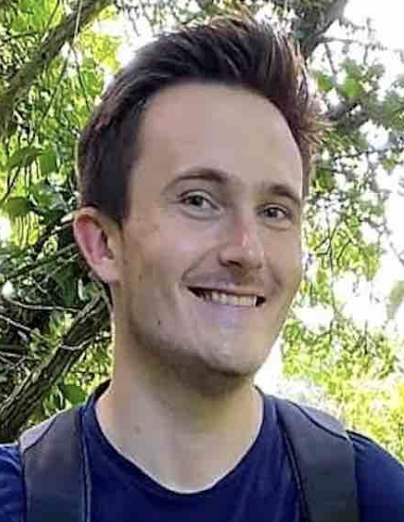
A panel of judges from across the globe assessed this year’s submitted essay proposals and selected Cryer’s as the best response to this year’s theme, which recognizes the 250th anniversary of the US Declaration of Independence.
His essay, Independence, Incarcerated: Prison Newspapers, Abolitionist Critique, and Commemorating the ‘Bicentennial Behind Bars’, will examine how 1970s US prison newspapers leveraged the Declaration of Independence to radically contest America’s promises of liberty and equality.
Cryer will receive a $100 prize and have his essay published in the journal.
Judges said Cryer submitted an “incredibly strong proposal”:
“The author builds out a fascinating argument about the concept of freedom and its role in American national memory, and who is allowed to participate in that memory-making process. Well-supported by research and sources.”
Cryer is a historian of the twentieth century United States, specializing in the intersecting histories of education, ideas, memory, and race. His research interrogates how historical narratives have been strategically appropriated, distorted, and mobilised to serve contemporary political agendas.
Before arriving in Oxford, he completed a BA (Hons) in History and an MPhil in American History at Cambridge and a PhD in American History at University College London’s Institute of the Americas.
Cryer said he was “delighted” on the win.
“This essay forms a key part of my research into how those historically excluded from the American democratic project have grappled with its limits, using America’s revolutionary language to expose its deepest contradictions,” he said.
“As a trans-Atlantic researcher, I’m especially pleased to recognize the potential of digitized prison journalism archives, which connect these remarkable sources to scholars around the world. These voices stay with you long after you’ve finished reading, and I’d encourage anyone to incorporate them into their research and teaching. For me, reading prison journalism is to always learn of journalism’s capacity to breach the bounds of borders and prison bars. It helps, I hope, to expand both journalism history’s archive and our moral and political imaginations.
“I’m grateful to everyone at Journalism History for running this wonderful scheme, and I cannot wait to read this year’s contributions!”
Runners up in the contest were Dr. Jason Guthrie (Associate Professor at Clayton University) in second place and Anjali DasSarma (PhD candidate at the University of Pennsylvania) in third place.
Honorable Mention was Benjamin Richards (PhD candidate at RMIT University, Melbourne).
Guthrie’s essay, Free Speech and Copyright, explores the tension between the protection of intellectual rights and the protection of freedom of speech in the US Constitution.
DasSarma’s essay, The Sinews of Colonial Hypocrisy: Indigenous Unfreedom in Newspaper Advertisements in 1776, examines announcements of Indigenous freedom seekers’ departures and rewards for their capture published in The Constitutional Gazette, The Connecticut Courant, and The Pennsylvania Evening Post.
Richards’ essay will investigate the factors that led to the omission of any codified protections for the freedom of the press in Australia’s constitution.
Originally the brainchild of Dr. Erika Pribanic-Smith (University of Texas at Arlington), the Journalism History essay competition began in 2018.
Journalism History is the official academic journal of the Association for Education in Journalism and Mass Communication’s History Division. This year, Journalism History celebrated its 52nd year of continuous publishing, making it the oldest peer-reviewed publication on the subject in the United States.
 Journalism History journal