
2025-11-Book-Review-November| Download PDF
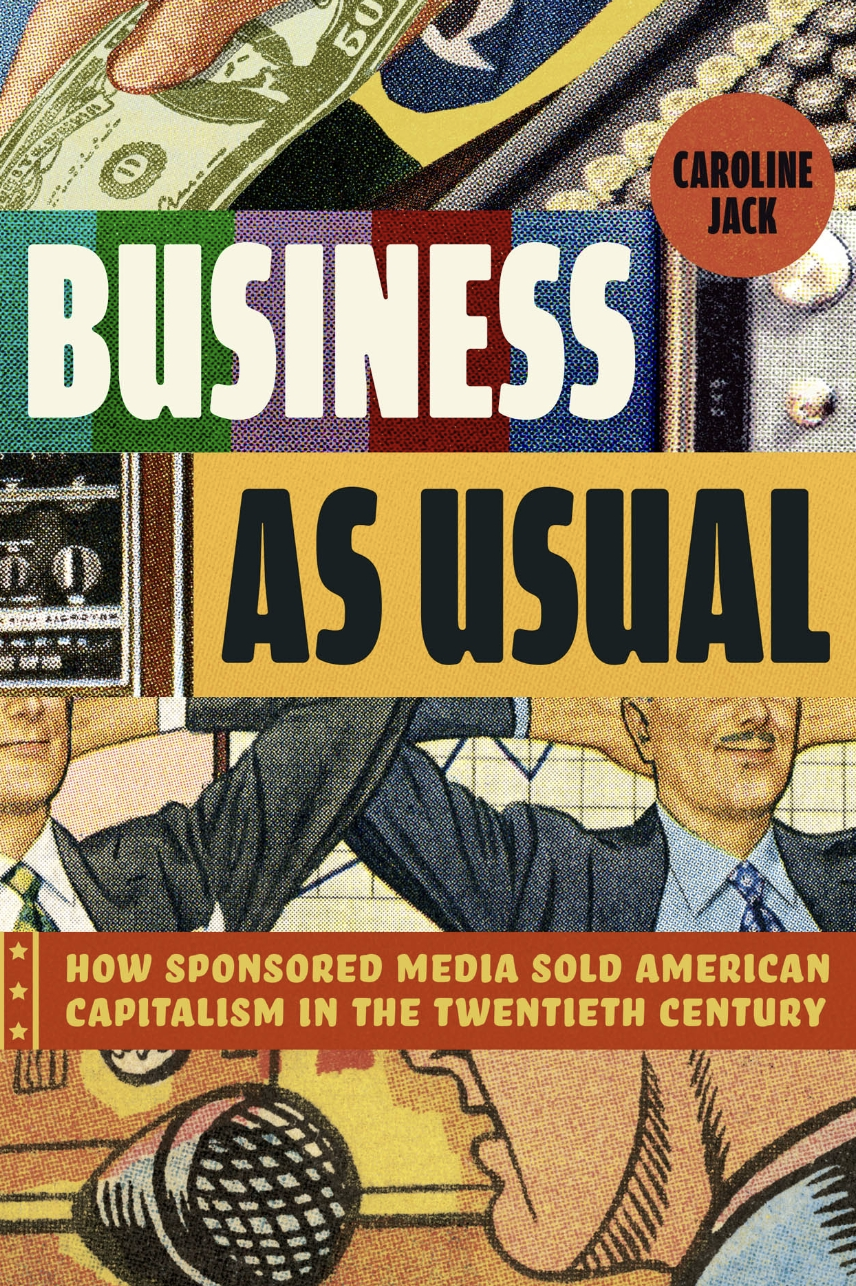
Jack, Caroline. Business as usual: How sponsored media sold American capitalism in the 20th century, Chicago: University of Chicago Press, 2024, 264 pp., $30.00 (Paperback). ISBN: 9780226835143 (Reviewed by Sydney Stevens, Louisiana State University, sstev55@lsu.edu)
Within the past century, it is no secret that some media manipulate their findings and have questionable intentions when communicating with the public, especially when such information relates to capitalism. In Caroline Jack’s Business as Usual, the author analyzes ever-evolving economic ideologies and how corporate-sponsored media has impacted Americans and their perception of capitalism. Focusing on the mid-twentieth century, Jack argues that broadcast media outlets should not solely be studied for their technological advancements, as we should also investigate the companies and people behind them who were promoting corporate media.
Detailing how corporations engaged with mass media in hopes of promoting capitalism as central to the American way of life, Jack discusses the impact of “sponsored economic education media.” Examples range from public service announcements, educational films, and pamphlets, to games that were distributed throughout schools and communities to boast the ideals of “free enterprise,” all with the overall goal of “selling America to Americans” (p.28). Jack’s goal is to expose how broadcasting was framed and utilized as a financially beneficial industry while also serving as an asset for private “educational” needs. She explains how these corporate sponsored messages obscured the boundary between public service announcements and propaganda, advocating for the normalcy of commercial media.
The book’s title, Business as Usual, ironically highlights how the ideological framing became so secondhand that non-commercial outlets were seen as an oddity. Jack diligently constructs her analysis through policy disputes, corporate publications, and other social campaigns, following historical shifts from the 1940s to the 1990s and the rise of digital media. Jack concludes that these events helped skew social understandings of the relationship between capitalism and patriotism. She also analyzes journals, policy memos, and marketing materials to illustrate how these corporations were successful in manipulating the public to believe that free enterprise, when broadcasted, was imperative to informing Americans and continued growth in various aspects of life. In her research, she shows how corporate success was associated with national interest, meaning that any criticisms of the media were often framed as an attack on American capitalism as a whole.
Jack offers a fresh perspective. She does a great job in covering the more commonly known factors that shaped corporate media in America as well as its understated forms, offering a deep and nuanced view on the impact of propaganda and advertising over the past century. Exposing mechanisms such as how corporations aligned themselves with the image of patriotism, she provides a novel approach that clearly delineates American corporate hegemony. The relevance of this is more dire today, as the lines between what is true are increasingly blurred and the need for transparency has only intensified. Her work stresses the importance of detecting the true intentions of media, especially when it affects how we perceive and shape the world around us.
The book’s significance is its ability to detail how professional language was intentionally and rigorously implemented in defending and legitimizing commercial media as a social norm. This worldview obscured or delegitimated notions of media being used for public engagement and informing audiences without financial benefits. Thus, in regard to media, economic liberalism did not only apply to economic arguments. It was also used as an ideological tool in shaping public perception of media’s proper role in society, what media should be, and who should control and own it.
This book would be appropriate for any undergraduate or graduate course focusing on media studies or journalism history. Jack’s narrative is clear and well thought out. She covers complex topics without shying from controversial themes, illuminating the deep-rooted connections between corporate messaging and its effect on American social thought. Business as Usual is a thought-provoking book that not only emphasizes the behind the scenes of corporate media but also challenges readers to reconsider what they have been told about media and capitalism. I believe this book is informative and stimulating, and it can act as a great addition to any related course or just a fun read.
 Journalism History journal