
2024-12| Download PDF
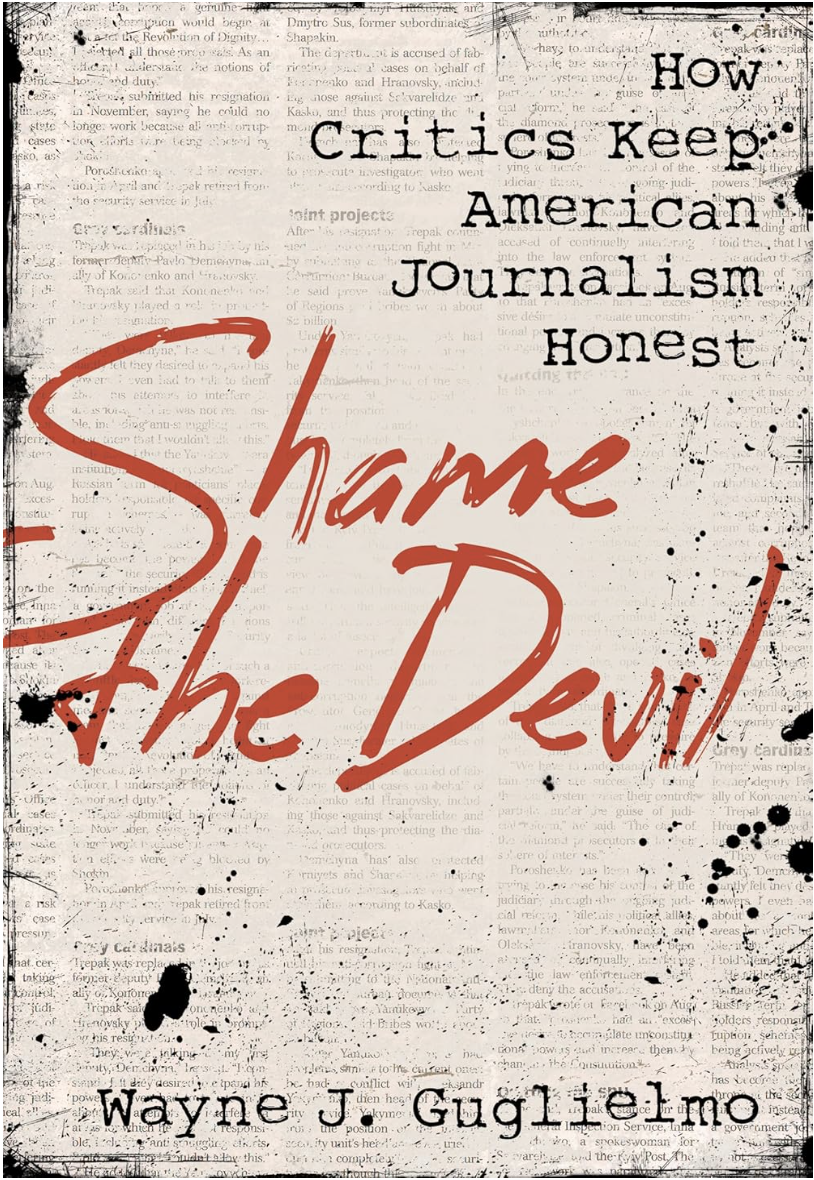
Guglielmo, Wayne J. Shame the Devil: How Critics Keep American Journalism Honest. Lanham, MD: Rowman & Littlefield Publishers, 2023, 308 pp., $36.00 (hardback). ISBN: 978-1-5381-7481-4.Susca, Margot. Hedged: How Private Investment Funds Helped Destroy American Newspapers and Undermine Democracy. University of Illinois Press,2024, 215 pp., $19.63 (paperback). ISBN: 978-0252087561
Reviewed by Ecaterina Stepaniuc, Department of Journalism & Mass Communication, North Carolina Agricultural and Technical State University, USA estepaniuc@ncat.edu
In Shame the Devil: How Critics Keep American Journalism Honest, Wayne J. Guglielmo offers a thorough exploration of the evolving role of the press in shaping, and sometimes, distorting American democracy. In an era where ‘fake news’ accusations are excessive and media credibility is constantly questioned, Guglielmo does an incredible job at tracing the history of American journalism over the past century, examining the ways in which media critics have held the press accountable. This rich historical narrative emphasizes the role journalism has played in public life and its impact on democracy. One thing you will find interesting after lecturing Guglielmo’s book is that when it comes to press criticism, certain themes have stubbornly persisted over the years. While this might disappoint some, it could also help others realize that when society transforms, the press tends to also evolve and be subject to change.
Guglielmo dedicates the first seven chapters to the evolution of the American press. He references influential journalists and media critics who have challenged the media establishment and suggested premises for change. From Walter Lippmann’s skepticism that a reformed press could be a reliable instrument of truth to George Seldes’ push against corporate media, Guglielmo paints a detailed picture where these media critics battled for journalistic integrity. Seldes, for instance, passionately declared that the press deeply needs free men able to exercise their free minds, advocating for a media that could tell the truth and stand independent from corporate interests. J. Liebling came with a different approach; he endorsed a comic style and ridiculed big news organizations, which according to him, were full of errors. “Freedom of the press is guaranteed only to those who own one,” believed Liebling (p. 83). Through these critics, Guglielmo discloses the ongoing tension between the press’ duty to inform the public and the constant influence of powerful institutions on the news narrative.
Another key figure in Guglielmo’s account was Ben. H. Bagdikian, a media critic who argued that a journalist’s obligation should above all else be to the people, calling for a tougher standard of integrity. Reed Irvine, on the other hand, corrected media biases byproviding edits with counter-narratives that often overcame his judgement, which in many instances, led to stereotypes and misinformation.
Guglielmo then turns to Neil Postman, a prominent media critic who argued that news was more about entertainment than information. Postman believed that technology shapes culture and values, and with the rise of television, the public’s perception of reality was altered. Noam Chomsky echoed a similar concern saying that media corporations shape public opinion to maintain the status quo, often by promoting the values and ideas of the those in powerful positions.
In the final chapter, one of relevant significance, Guglielmo introduces contemporary media critics, who in his view have not only expanded upon the issues raised by their predecessor but have also tackled new ones. These critics wrestle with questions like freedom of the press, dangers of propaganda, and probably the most critical one – Is journalism, with all its flaws, still capable of being the foundation of a deliberative democracy?
This chapter is particularly great at highlighting diverse perspectives, featuring voices from the right, the left, and those endorsing a more centrist stance. Whether the media is addressing issues like globalization, immigration, election integrity, race, or the press itself, journalists often demonized opposing viewpoints, contributing to a fractured view on democracy. Yet, one might wonder if this complex environment may be the very essence of a democratic press.
Guglielmo does an impressive job at highlighting that despite the preferred stance, both conservative and liberal critics seem to acknowledge that modern media too often see conflict as a leading element in their business. He references conservative L. Brent Bozell III who argues that in their desire to destroy a president and his administration, the media destroyed itself (referring to the media’s treatment of Trump). Guglielmo then shifts to a liberal perspective coming from James Fallows who claims that when it comes to the state of his profession, “news had become too often devolved into spectacle and reporters into pampered celebrities” (p. 239). The solutions proposed in the closing pages seem to suggest that the public is hungry for a different media, one that doesn’t choose sides and political wings, but keeps the public’s interest in mind. Journalist Matt Taibbi suggests that toning down the hate and returning to a news system that is balanced and independent would become part of the solution. This would in return improve the profession and save democracy.
Overall, Shame the Devil: How Critics Keep American Journalism Honest is a thought-provoking exploration of the media’s complex role in democracy. The book would fit a large variety of upper-level journalism courses willing to discuss solutions to today’s polarized media landscape. After reading this book, readers will gain a deeper understanding of how journalism has both shaped and been shaped by the political and social forces at play.
Moreover, the book comes at an incredibly significant time, with Donald Trump elected the 47th president of the United States, coinciding with a Gallup study showing that Americans’ trust in media is low. It seems that the general public tends to abandon traditional media outlets by turning to independent content creators and podcasters for information. This trend could lead to widespread misinformation, but it should also serve as a wake-up call for media institutions to safeguard the future of journalism.
 Journalism History journal