
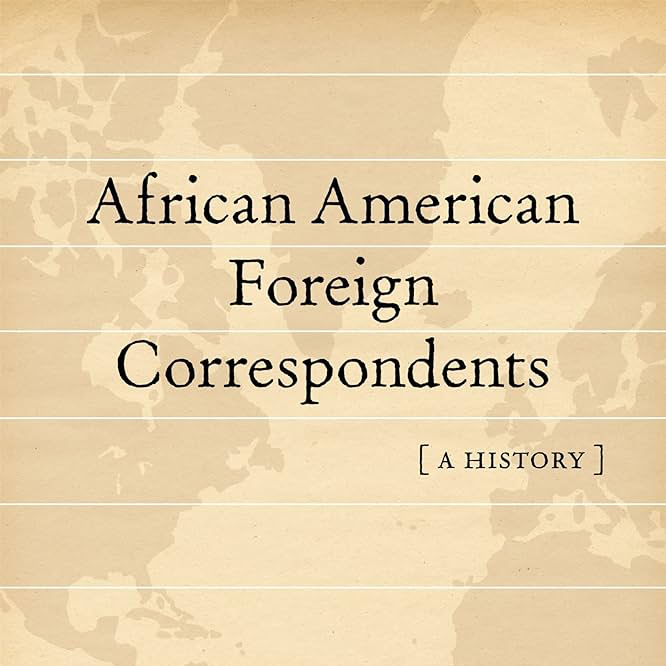
 For the 137th episode of the Journalism History podcast, Historian Jinx Broussard discusses the career of Ethel Payne and the book African American Foreign Correspondents, A History.
Jinx Broussard is the Bart R. Swanson Endowed Memorial Professor and teaches public relations, strategic communication, media history, and mass media theory in the Manship School of Mass Communication at Louisiana State University. She was honored as the AEJMC History Division’s Donald L. Shaw Senior Scholar in 2021, recognizing an outstanding record of media history scholarship.
Transcript
Jinx Broussard: She did not hesitate to do that in her push for social justice and for equal rights, and she told stories that the mainstream press did not cover.
Teri Finneman: Welcome to Journalism History, a podcast that rips out the pages of your history books to reexamine the stories you thought you knew and the ones you were never told. I’m Teri Finneman, and I research media coverage of women in politics.
Nick Hirshon: And I’m Nick Hirshon, and I research the history of New York sports.
Ken Ward: And I’m Ken Ward, and I research the journalism history of the Great Plains and Rocky Mountains.
Teri Finneman: And together, we are professional media historians guiding you through our own drafts of history. Transcripts of the show are available at journalism-history.org/podcast. This episode is sponsored by Lehigh University’s Department of Journalism and Communication, inspiring the future makers.
She’s known as the First [00:01:00] Lady of the Black Press. Ethel Payne’s remarkable career took her to the most important moments in history. From the Eisenhower White House, to the Civil Rights Movement, to the Vietnam War, Payne was a pivotal figure in journalism, especially as a foreign correspondent. African American foreign correspondence was a conversation about race and media, race and society, government and media, and media and society, according to our featured author today. Thousands of stories constructed an alternate narrative grounded in advocacy and truth-telling that pleaded the case for Blacks and people of color worldwide. In today’s episode, Jinx Broussard of Louisiana State University discusses her book, African American Foreign Correspondents: A History.
Jinx, welcome to the show. Why did you want to write a book about African American foreign correspondents?
Jinx Broussard: I will begin by telling you a little vignette. [00:02:00] I was going to Hampton University maybe about 15 years ago to do some research, and the dean of the Manship School, Jack Hamilton, asked me if I would check the library at Hampton to see if I could find information about a Black foreign correspondent whose name was [John] Rover Jordan. So while I was at Hampton, I went [00:02:30] to the library, and I started looking for Jordan’s name. I knew that he was a World War II correspondent, and I wound up turning page after page of the microfilm machine, finding dozens and dozens of Black foreign correspondents that wet my appetite, because prior to that time, whenever I thought about foreign correspondents, the only Blacks who came to mind were [00:03:00] Bernard Shaw with CNN hiding under the bed with rockets flying around when the US invaded Iraq.
And I also thought of Ed Bradley, who covered Vietnam for CBS, but the names of Black foreign correspondents never came to my mind. So while doing this research, I came across their names, the names of the foreign correspondents who were covering World War II. I came back to campus, and I told Jack about my findings, and we sat and talked, and he said, “Wow, that sounds like a great book.” And I decided that I wasn’t merely going to focus on foreign correspondents, I was gonna go as far back as I could to find out when this genre started and why. My appetite just reading the articles, the stories that the war correspondents fielded [00:04:00] wetted my appetite, wet my appetite, such that I became engrossed and dedicated to finding out more information.
I knew that just as I, a journalist, an educator, did not know about Blacks engaging in foreign correspondence, the world did not know either. And so, I view this as a book that needed to be written, not for the sake of writing it, but to find out the why and the how, how they did their job, what problems they encountered and so forth and so on. And so that’s how I started. That’s what prompted me to write the book. And imagine my surprise when I found that Frederick Douglass in my research became an accidental foreign correspondent. And I started digging even deeper and deeper and deeper, and found a Mary Ann Shadd Cary, [00:05:00] who was the first Black woman to edit a newspaper in North America. I found George Washington Williams, and I started finding a common theme in what they were writing, what they were saying. One of the things they wanted to do just as the Black press did, they wanted to see for themselves, they wanted to tell the true story, the real story.
They wanted to tell the other side of the story because they wanted to change public perception of people of color in the United States and worldwide. But they also recognized, and I argue in my book, that racism at home, oppression at home, and repression abroad kept Blacks and non-white others worldwide in a perpetual state of subjugation. And that is what prompted me to go on the journey to [00:06:00] not only tell the story, but to provide the explanation of why Black foreign correspondents embarked on their journey. I wanted to show that foreign correspondence was not just about the daring, the dashing, the suave white men and an occasional white woman, but indeed, there were foreign correspondents who started the genre as early as the mid-1800s and continued with that until I would say after the Vietnam War, because by that time, only one Black newspaper was able to field a correspondent.
So I know that I’m kind of going on and on, but I know you can probably sense my excitement about having the opportunity to write about these foreign correspondents and to fill that void in history, to show that [00:07:00] Blacks were indeed a part of this elite form of foreign correspondence, not for the sake of just showing it, but to let the world know what they were doing.
Teri Finneman: In recent decades, U.S. media organizations have significantly cut back on international reporting. American Journalism Review found at least 20 major outlets got rid of their foreign bureaus between 1998 and 2011. Why do you think foreign correspondents, in particular, are important to journalism and to journalism history?
Jinx Broussard: Foreign correspondents represents an elite genre in journalism, one, that those who study journalism history need to know about. Um, I argue also that it’s a matter of national security for people to be engaged in foreign correspondence. One, to inform the world. They also help to shape worldview. They give visibility to the action of [00:08:00] others, and they help us to understand a myriad of issues: political, social, societal, economic. It’s so important because we do not live in a vacuum. And foreign correspondents tell the compelling stories and provide them information from abroad that help us to shape our perspective of the world and for others. It is so important to gain a perspective of the world that lives and that exists beyond the shores of the United States, or whatever your given country is, that are people, places, and issues that impact all of those countries, all of those entities, and others who live elsewhere need to get that information.
Um, arguably, knowledge of foreign correspondence and the role it plays is [00:09:00] becoming … invisible, But I firmly believe that it is necessary for us to continue elevating foreign correspondents in the history of journalism.
Teri Finneman: So we’re gonna be talking a lot today about Ethel Payne, who I’ve long wanted to do a show about. Uh, she was called the first lady of the Black press and is included in your book. Tell us about her and the early part of her career.
Jinx Broussard: Payne did not aspire to become a journalist. She wanted to be a lawyer. And why? She felt that that was going to be the way to defend the rights of her people. So having graduated from college, she applied to the University of Chicago, but she wasn’t accepted because it had a closed-door policy for Black people. She took a job as a clerk at the Chicago Public Library, but she was not satisfied because the job did not [00:10:00] allow her to use her knowledge. Um, and more than that, she had ambitions to just see the world. So she took a job as a hostess at the U.S. Army Special Services Club in 1948 in Tokyo. And she recorded her observations of relations between the soldiers, specifically relations between Black men and Korean women. [00:10:30] She also recorded instances of racism and discrimination on the Army base.
And she pointed out, when she did an interview maybe in 1987, that what she wrote about in her diary was not known in the state. One of the Chicago Defender’s reporters saw her diary, read her diary, and shared it with John Sengstacke, who loved her writing. [00:11:00] And almost immediately after reading the diaries ran her stories, as she said, with big, bold headlines in the Chicago Defender, and so, that’s pretty much how she got started. A few years after that, her big moment came when, and I think you’re gonna… we might talk about this a little bit more, but she was assigned to the Washington bureau of the Chicago Defender, and she was a one-woman bureau and one of the – one of only two Black women for a period of time, who covered the Capitol Hill, who covered the White House and so forth.
So during her career, not only covering the battles that took place on Capitol Hill, the civil rights movement was just beginning. And her blunt style of reporting drew attention to [00:12:00] her. So I’ve kind of glossed over her journey from college to the Chicago Public Library, to the Special Services Club in Tokyo, and to how she wound up at the Chicago Defender. In fact, John Sengstacke told her, he sent her a note telling her he liked her style of writing, and suggested that she come to work for the Defender, and that she did.
Teri Finneman: A big moment in Payne’s career came when she challenged President Dwight Eisenhower on segregation during a press conference in 1954. What was the impact of that, and how did her civil rights reporting evolve from there?
Jinx Broussard: She challenged Dwight Eisenhower, her blunt reporting challenged Dwight Eisenhower. And interestingly, he did not call on her again ever after she asked him why he was not, [00:13:00] um, integrating the interstate or the railway/railroad. Um, I need to check that fact. I think it’s the interstate system. And some people say that her tenacity helped to put the civil rights movement on the front burner because media, Black media, white media, international media covered the fact that she had asked the president this question, and of course, he responded that he was not interested in serving just special interests. He was the president of the United States. So she went on to cover the Montgomery Bus boycotts. She covered the marches in Selma, Washington. She covered the March on Washington eventually, and she garnered that reputation as being a newsman’s news woman.
[00:14:00] Let me also say that she was not disrespectful. She was a quiet woman, but she was fiercely determined. Civil rights and the rights of her people were always on her agenda. She was right there at the seat of power, and she was determined, absolutely determined, to fight for the rights of her race and for others who were marginalized. She used her pen, and she used her voice to be able to tell that story to go to where the story was. And she became a preeminent reporter on the civil rights movement.
Teri Finneman: So let’s maybe just expand on that a little bit. This is maybe repeating what you just said, but what do you think made Payne so unique, that she is the one who is dubbed First Lady of the Black Press?
Jinx Broussard: In many ways, she was a first. First woman to cover… To, to be assigned [00:15:00] to cover the White House to be a part of the White House press corps. But even more than that, I believe that she was so unafraid, she was so tenacious. She saw her mission as that of Frederick Douglass. And his mantra was to agitate, agitate, agitate on behalf of her people. So, again, as I just said, she did not hesitate to do that in her push for social justice and for equal rights. And she told stories that the mainstream press did not cover. She was lucky enough to be working for the Chicago Defender, which, in the Black community, was almost seen as a national newspaper for Blacks in this country. And so, that is why I believe that she was called the first lady of the Black press. She represented herself well. She found the story wherever it was, [00:16:00] and she was tenacious in doing her job, in trying to advocate while still trying to be objective.
And I wanna point that out because she was an objective reporter, but she also sought out stories that just by presenting those stories in and of themselves advocated for the race by exposing the horrendous conditions under which Blacks lived, work, the fact that they could not eat, sleep, live, even work where they wanted to, was denied them. And so, that is why I believe that she was called the first lady of the press in many ways, she was the first in the Black press.
Teri Finneman: The Chicago Defender sent Payne to cover the Vietnam War. Vietnam marked the first time Blacks were fighting in a fully integrated military. Payne was the only representative [00:17:00] of the race press there in late 1966 and early 1967. Why did they send Payne in particular, and what did they want her to focus on?
Jinx Broussard: The paper believed, one, as it wrote in the announcement of her being dispatched, that it would be a unique thing to have a woman cover the war. They knew she had what it took. She had demonstrated her toughness, toughness, and she had remained with the newspaper after integration when other Black stars were moving on to mainstream media. The newspaper also had a longstanding tradition of seeking firsthand information that was of interest to Black readers. The Black Press was no longer fielding foreign correspondents. And so the Defender had, for decades, been committed to getting news from abroad, but even more so, this was [00:18:00] a historic time because Blacks were for the first time fighting in an integrated military for freedom. And I’m using finger quotes here, freedom abroad, while race members were waging a battle for freedom and equality at home.
And so, the Chicago Defender knew that the reading public, the Black public, needed to know what was happening with race soldiers in the jungles of Vietnam. So she was sent for the express purpose of covering the Black soldiers engaged in the combat there. Black media and even mainstream media had reported that Blacks were dying in Vietnam in greater numbers proportionately than others. So, again, the Black community had a vested interest, interest in the war. [00:19:00] So Payne would try to create an understanding of the Black community and provide an explanation also for why the United States was involved in Vietnam. She was going there to tell, to write about the full role of the Black servicemen in Vietnam, especially since they were fighting in an all integrated war for the first time in history.
Teri Finneman: Tell us a little bit more about some of the particular stories she ended up reporting on there.
Jinx Broussard: She wrote a lot of feature stories while she was on assignment. She felt it was important to document everything the Black soldier was doing. She documented acts of heroism particularly in light of the civil rights struggle back home, and the constant effort as the Chicago Defender noted of others to divide Black people [00:20:00] on the war. So she wrote about Black civilians. She wrote about the attitudes of the Vietnamese people toward Black servicemen. She wrote about problems that they might have. And she did more than just report the Black angle. She also gave us stories that presented the total complexities of the war. For example, when she talked about the role and status of Black soldiers, she used their words to show that they were better off in Vietnam, because the soldiers said the enemy is the enemy no matter what their skin color is.
They also told her that in Vietnam, they were all one. They were… It didn’t matter whether they were from South Carolina or Louisiana or Mississippi. [00:21:00] One soldier told her that on the battlefield, we are all brothers. We all fight together. Um, we try to survive together. We die together. I’m paraphrasing, of course. Nobody has time to look at skin color. Now, for some stories, race took a back seat. For some soldiers, race took a backseat. Um, they were more concerned about fighting for freedom of other colored people. And that was an overriding factor because I told you there was some discord and there was some conflict between Blacks who advocated for the war, and we also know that Martin Luther King was definitely against the war, but there were some soldiers who saw themselves as part of a shared community, and [00:22:00] they saw that they were fighting for freedom for other people of color.
One of the major themes that Payne pointed out in some of her stories, and the soldiers also talked about that, was the duplicity of the United States regarding fighting for freedom abroad while Blacks were being discriminated against at home. There were others who just thought it was wrong to be bombing people of color because they saw them as part of a shared community. They felt that they had a shared identity. So clearly, they didn’t criticize the war outright. But in their interviews with her, they would pose those types of questions or make those statements. Soldiers also talked about their ambivalence about the civil rights movement and the tactics that were being used in the United States. [00:23:00] Some soldiers said, “Enough of this non-violence that Martin Luther King is talking about. When we get home, we are gonna be demanding our rights.” Um, she also, as, as did the Black Press, focused a lot on the accomplishments of the soldiers.
She wanted to correct misrepresentations about them because in previous wars, the narrative had been that Black soldiers just cut and ran. So, Payne saw it as her mission to correct those falsehoods that the mainstream media perpetuated about the Black soldiers. She said she was not gonna spend a whole lot of time dwelling on the purpose and the validity of the war. She wanted to correct the misrepresentation, so she highlighted Black troops that were performing magnificently. She once ran a story about a colonel who had [00:24:00] graduated from the U.S. Military Academy, who had been the only Black in the academy and was not talked to the whole time he was there, yet he had risen to the rank of colonel.
She wrote stories about Black captains who were piloting planes. And so, the goal of the Black press and Black foreign correspondents was, again, to change the perception of people of color, of Blacks, so as to get the United States to see our valor, our humanity, our courage and hope that would then spur the United States to grant Blacks equal rights, equal protection, and basic humanity. Some of the other stories had to do with, as I said, kind of human interest stories. She wrote about the landscape of Vietnam, about the people, she wrote about the culture. [00:25:00] One of her goals was to educate her readers about the country where Black people, Black men were fighting.
She also wrote stories about mixed race children, and she compared the lives of soldiers, children of mixed race in Vietnam with the lives of children in Vietnam also. She also liked to talk about, as the Black press did, the linkages between peoples of color. So in one of her stories, she talked about how the Vietnamese kind of felt a kindred to Black Americans. And as she was walking through a village one day, a Vietnamese woman said, “Hello, soul sister,” and I thought that was pretty neat also.
Teri Finneman: So after Vietnam, she went to Africa in 1969 and returned there throughout the 1970s. What kind of reporting did she do there, and how did it differ from what appeared in [00:26:00] the mainstream press?
Jinx Broussard: She told stories that were not being told, for one thing. She had an interview with Idi Amin, whom people call the butcher of Uganda. She interviewed Haile, Emperor Haile Selassie, who was revered in Ethiopia. She covered the civil war in Nigeria for six weeks. She did an exclusive interview with Nelson and Winnie Mandela. So in many ways, she was covering the stories that they were not covering, and she was trying to bring perspective, a different perspective from what the mainstream media might’ve been presenting as well as what mainstream media was omitting.
Teri Finneman: Overall, what do you want people to remember about Payne’s legacy?
Jinx Broussard: I want people to remember that Payne was a professional journalist. She was a [00:27:00] foreign correspondent, that she remained committed to the Black press, as I said a few minutes ago, when others, other Black correspondents or journalists went to the mainstream media for higher salaries, for more visibility and so forth. But she was committed to the cause of equal justice and equal rights. She saw the Black press as a way of helping the world to see, helping readers [00:27:30] to see the world differently. She saw it as a way to change the status quo. She used her pen to channel Black discontent, and to confront an oppressive system, thereby creating meaning for people of color, but for anyone who wrote, who read the Black press.
Teri Finneman: Well, we certainly encourage our listeners to get your book because [00:28:00] this is just one story of many that you have included so that they can learn more about Black foreign correspondents from journalism history. You touched on this at the beginning of the show, but let’s just circle back. Overall, what do you think is the historical significance or impact of the reporting from these correspondents?
Jinx Broussard: These correspondents help to change the perception of people of color, not just in the United States and worldwide. They also saw to affect social, political, economic justice at home and abroad. One of the things that I found that they spent a lot of time writing about and calling for through their objective stories and into colonialism and into imperialism and into racism. They were the eyes, the ears and the voices. They were the advocates. They were the champions for our race. They engendered [00:29:00] racial pride, and they corrected misrepresentations. One of the other things that people might not know is that they also sought to teach life lessons, to give Blacks direction in terms of how they should live their lives. They often pointed to what Blacks were doing in other countries, what Blacks were doing in Africa, a lot of times focusing on the accomplishments in order to, [00:29:30] one, to spur African Americans to action, but to help fashion a meaning and identity for them in which they could take pride.
Teri Finneman: And then our final question of the show for every guest is, why does journalism history matter?
Jinx Broussard: Journalism history matters because I often get this wrong. Uh, sometimes I say, today’s news [00:30:00] is yesterday’s history, or yesterday’s news is today’s history. But in my view, we have to tell the history of media, and we have to include those who have been marginalized as well as those who have been on… who have gotten a lot of visibility. [00:30:30] And so, I think it matters so that we can continue to elevate, to inform, to convey information, I know that’s redundant about the media, and make sure that it’s not just his story or their story, but all of our stories.
Teri Finneman: All right, well, thanks so much for joining us today.
Jinx Broussard: Thank you so much.
Teri Finneman: Thanks for tuning in and be sure to subscribe to our [00:31:00] podcast. You can also follow us on Twitter at JHistory Journal. Until next time, I’m your host, Teri Finneman, signing off with the words of Edward R. Murrow. Good night, and good luck.
 Journalism History journal