
2024-1 | Download PDF
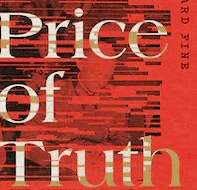
Fine, Richard. The Price of Truth: The Journalist Who Defied Military Censors to Report the Fall of Nazi Germany. Ithaca, NY: Cornell University Press, 2023, 312 pp., $41.95 (Hardcover). ISBN: 9781501765964 Reviewed by Dale Zacher, Department of Mass Communications, St. Cloud State University, dzacher@stcloudstate.edu
One of the most controversial journalistic decisions of World War II is thoroughly examined in Richard Fine’s new book, The Price of Truth: The Journalist Who Defied Military Censors to Report the Fall of Nazi Germany. The journalist referred to in the book’s title is Edward Kennedy, who was the first to report the German military’s surrender on May 7, 1945, in Reims, France. Kennedy, the Associated Press’s Paris bureau chief at the time, was one of 17 journalists allowed to witness the surrender ceremony, but the military placed a 36-hour embargo on the release of news to appease the Russian government, which wanted to make sure the Germans would stop fighting on the Eastern Front.
Frustrated when he learned that the Germans had already broadcast the news of their own surrender from a powerful radio station in territory controlled by the Allies, Kennedy decided to go around military censors and release the surrender story to the American public. In his view, the Allied command was not keeping its part of the surrender secret, so why should he. Kennedy told his military minders in Paris what he planned to do, but he was not taken seriously. He then used a private telephone line that staff working for the military newspaper Stars and Stripes maintained to call the AP desk in London with his breaking news story. The quality of the phone line was so poor that Kennedy could barely get the surrender information to London, and he did not explain that his report had circumvented military channels. Initially, the news was a sensational scoop for the AP, but it increasingly became troubling when it was learned that Kennedy had broken censorship protocols. Other media were angry because they had followed the embargo and consequently got scooped. Kennedy was attacked from all sides and ultimately was fired after a prolonged discussion among AP leadership and its membership.
Fine does a masterful job of building new context around the Kennedy controversy making the book broader and more important in its significance to journalism history. He uses surviving archives and writings left by Kennedy, other journalists, AP leadership, military public relations officers, and various military and government leaders to paint a colorful and balanced portrait of U.S. press-military relations in the last two years of the war in the European Theater.
Fine recounts several clashes between the press and military that started with Allied campaigns in North Africa and Italy. Fine shows that members of the press were patriotic and supportive of the war, but they were also eager to scoop their competitors and often frustrated by the public relations officers with whom they had to work. Moreover, they frequently felt censorship was imposed on them for political, not military, reasons.
This is not just a book about journalism. It also contributes to our understanding of the history of public relations. Fine’s archival research brings to life the public relations officers who struggled to satisfy the news media’s many needs while meeting their military commanders’ demands.
The findings of the book thus poke holes in the conventional wisdom among historians that World War II was a period of unprecedented cooperation and mutual agreement between the news media and the military on how to cover the war.
This book would be useful in a media ethics class to illustrate the tensions a military correspondent faces when the public’s right to know is challenged by the military’s claim that certain secrets must be kept. A public relations class could use the military’s public relations plans outlined in the book as a historical case study to critique. Any researcher or student interested in military-press relations would benefit by consulting this book.
The book has over 550 endnotes, relevant photographs, and a comprehensive index. A guide to the extensive abbreviations and acronyms is included. The book could have used a “cast of characters” guide because so many people are referred to in the text. Readers are forced to search the index to remind themselves of who is who and what position that person held.
Should Kennedy have released the surrender news? He said the news was already out, and the 36-hour embargo had no military significance. However, the military at the time, including Allied Supreme Commander Dwight D. Eisenhower, claimed lives were at stake if the surrender news was disseminated. As Kennedy later argued, was that just political cover to avoid angering the Russians? Kennedy always defended his actions and said he would do it again. His only regret was that he wished he had made it clear to his AP colleagues during the phone call that his report was unofficial and he was bypassing censors.
 Journalism History journal