
2023-6 | Download PDF
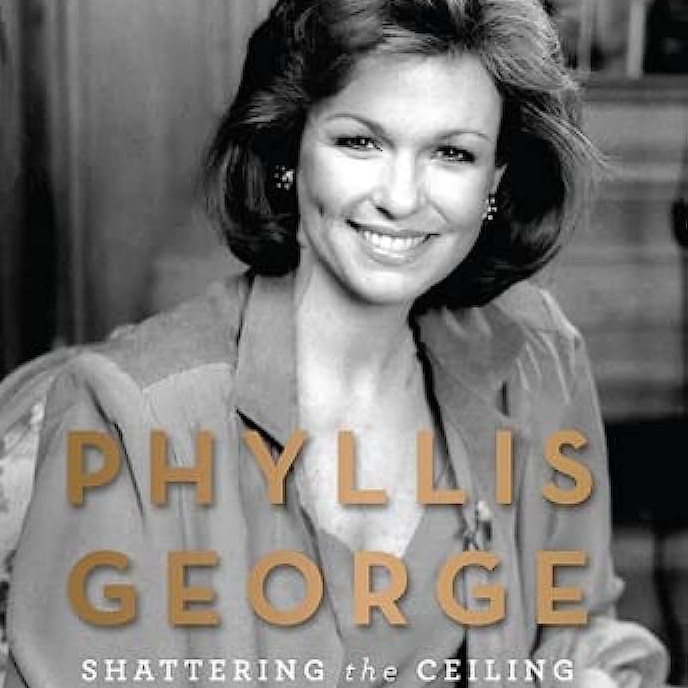
Volponi, Paul and Shulman, Lenny. Phyllis George: Shattering the Ceiling. Lexington, KY: The University Press of Kentucky, 2022, 216 pp., $27.95 (hardback). ISBN: 9780813195810, Reviewed by Kay Colley, Department of Mass Communication, Texas Wesleyan University, USA, KColley@txwes.edu
If you look on Wikipedia or the New York Times obituary of Phyllis George, you will see a version of George as a groundbreaker who just happened to be a beauty queen. If you read Paul Volponi and Lenny Shulman’s book, you will see a beauty queen who just happened to be a groundbreaking sportscaster and successful businesswoman.
Based on the title alone, it seems that Volponi and Shulman set out to paint Phyllis George as the groundbreaker she was. Still, in the process, the duo paints a stereotypical view of a beauty queen and mother rather than the fiery glass ceiling breaker others describe and what their book title indicates.
While the book Phyllis George: Shattering the Ceiling tells the story of George’s multifaceted life as a beauty queen, ground-breaking sports broadcaster, news broadcaster, advocate for the arts, author, philanthropist, and First Lady of Kentucky, Volponi and Shulman can’t seem to help from focusing on a stereotypical view of a woman in the media, specifically in sports media. Referring to George as Phyllis throughout the book while referring to her male counterparts on The NFL Today as Musburger, Cross, and Snyder really brought home the different treatment of women in sports communications, even as their lives are being chronicled as groundbreakers.
Focusing on George’s beauty and beauty pageant past instead of her role in sports broadcasting history, which landed her on the NFL’s 2019 list of legendary contributors who were game changers and saw her inducted into the Sports Broadcasting Hall of Fame in 2020-2021, shows the sexism that is still evident today, even among writers of historical books designed to chronicle the glass ceiling breaking efforts of women.
This book uses some interviews with family members and friends to chronicle George’s life as well as historical information and secondhand interviews, in the form of quotes, from George herself. While the interviews provide some information about George that may not be found in features about her, the interviews certainly lack the depth you might expect in a book-length review of her life.
The authors attempt to put George’s career into historical context with the Women’s Liberation Movement, Vietnam War, and most recently, the #MeToo movement. Those attempts at context seem to fall short so that the reader is left with the impression that Phyllis George lacked the depth and grit that she would have needed to be the first female broadcaster on The NFL Today and withstand the public scrutiny that went along with such a trailblazing position.
In its write-up of Phyllis George: Shattering the Glass Ceiling, the University of Kentucky Press said about Phyllis George: “Whether one knew her personally or only from her time on television, George left a lasting impression of strength, courage, and kindness that endeared her to all.” That heart isn’t always evident in this book, the first biography of George since her death in 2020. Lacking the depth of interviews, especially from George’s family and George herself, left this biography with a great title in need of more supporting evidence from the sports world and those closest to George.
For those people who want to know more about George’s legacy in sports broadcasting, a closer look at How The NFL Today Revolutionized Sports Broadcasting: You Are Looking Live! by Rich Podolsky might be worth a look. For those who want to read about how Phyllis George parlayed her time as Miss America into a multi-faceted life, including stints in sports broadcasting and the broadcast industry, then Volponi and Shulman’s book is for you.
To really understand how George broke the glass ceiling by sitting at the desk of The NFL Today and setting the stage for generations of young women to enter sports broadcasting, the authors need a more focused look at Phyllis George in that anchor seat—then we might be able to see the ceiling breaking more clearly.
 Journalism History journal